In the trucking industry, choosing the right trailer is one of the most important decisions a carrier can make. With the global semi-trailer market valued at $24.2 billion in 2025 and projected to reach $49 billion by 2035[1], understanding trailer types isn't just useful knowledge — it's essential for your business success.
At CRUMS Leasing, we believe every hardworking carrier deserves the right equipment to build a better life for their family. That's why we've put together this comprehensive guide to help you match your cargo with the perfect trailer type.
of freight moves in dry vans
standard trailer length
max gross vehicle weight[2]
Why Your Trailer Choice Matters
Selecting the wrong trailer type can lead to serious consequences:
- Financial losses
Damaged cargo, rejected loads, and missed opportunities cost carriers thousands each year
- Compliance violations
DOT and FMCSA regulations require proper cargo securement and weight distribution[3]
- Safety hazards
Improperly secured or protected cargo puts you, your load, and others at risk
The Three Main Trailer Types
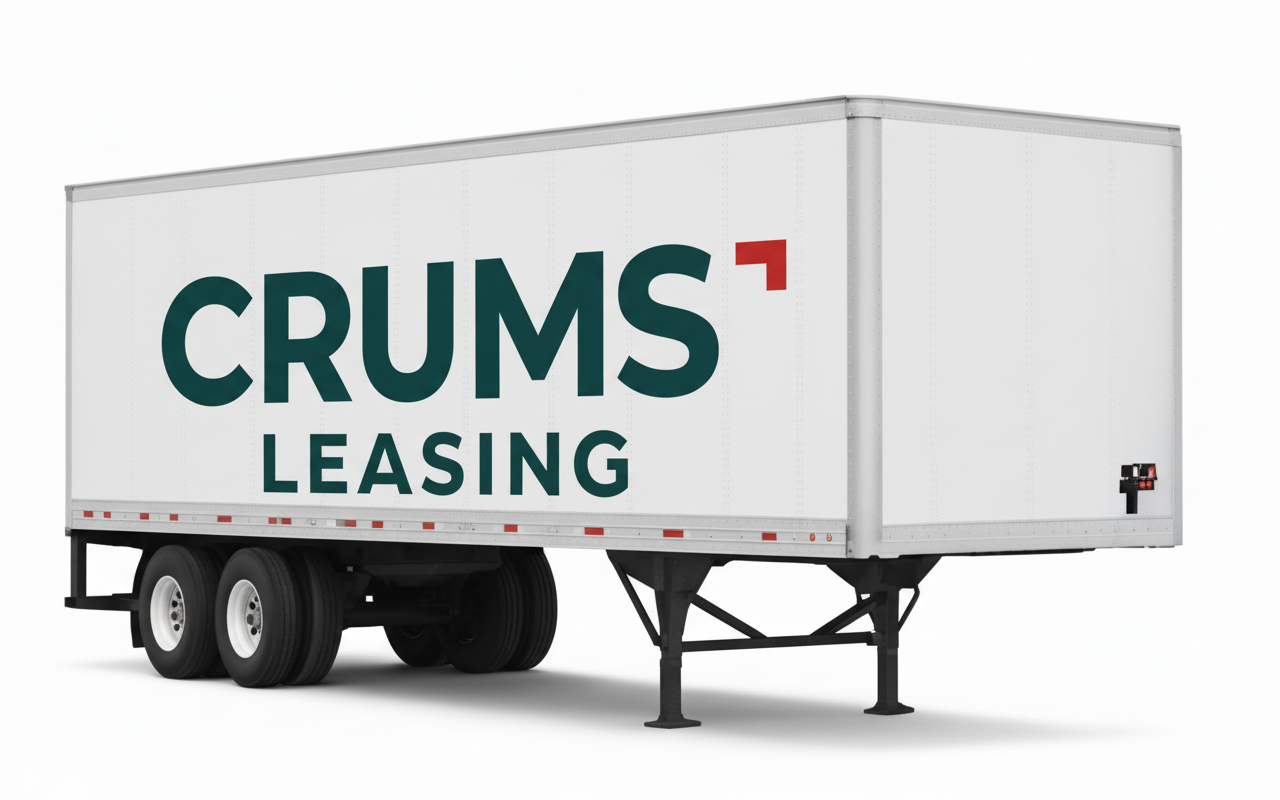
Dry Van
The workhorse of the trucking industry. Enclosed trailers ideal for general freight that doesn't require temperature control.
length
53 feet (standard)
capacity
Up to 45,000 lbs
volume
3,000+ cubic feet
Best For
- Consumer packaged goods
- Retail merchandise
- Electronics and appliances
- Non-perishable food items
- Furniture and household goods
Not Ideal For
- Oversized equipment
- Heavy construction materials
- Irregularly shaped loads
Flatbed
Open-deck trailers with no sides or roof, perfect for oversized, heavy, or irregularly shaped cargo.
length
48-53 feet
capacity
Up to 48,000 lbs
width
8.5 feet standard
Best For
- Construction materials (steel, lumber)
- Heavy machinery and equipment
- Vehicles and farm equipment
- Prefabricated structures
- Wind turbine components
Not Ideal For
- Weather-sensitive goods
- Small loose items
- Products requiring security
Looking for Quality Trailers?
CRUMS Leasing offers 53-foot dry van and flatbed trailers with flexible lease terms starting at 12 months. Our well-maintained fleet helps you stay on the road and get home safe.
How to Make Your Decision
When selecting a trailer for a specific haul, ask yourself these key questions:
1What's the cargo?
Consider size, weight, and security requirements. Oversized loads need flatbeds; enclosed goods need dry vans.
2What's the route?
Weather exposure, road conditions, and state regulations may limit your options. Flatbeds face weather risks; dry vans offer protection.
3What are the weight limits?
Federal law caps gross vehicle weight at 80,000 lbs[2]. Subtract your tractor and trailer weight to determine actual cargo capacity.
4What's your budget?
Flatbeds require more securement time and equipment. Dry vans are most economical and versatile for general freight.
The CRUMS Difference
At CRUMS Leasing, we're more than a leasing company — we're your partner on the road to success. Our people-first approach means we take the time to understand your hauling needs and match you with the right equipment.
Whether you're an owner-operator just starting out or an established carrier expanding your fleet, we offer dry van trailer leasing, flatbed trailer leasing, and short-term rentals to fit your business model. Follow the CRUMS home — where integrity, family, and opportunity come together.
Quick Reference Chart
| Cargo Type | Recommended Trailer | Key Consideration |
|---|---|---|
| General merchandise, retail goods | Dry Van | Most versatile, weather protection |
| Steel beams, lumber, machinery | Flatbed | Easy loading from all sides |
| Vehicles, heavy equipment | Flatbed / Lowboy | Check height restrictions |
| Electronics, high-value goods | Dry Van | Security and weather protection |
Need Help Choosing?
Our team at CRUMS Leasing is ready to help you find the right trailer for your needs. Whether you're hauling locally in Texas or shipping nationwide, we've got you covered.
Frequently Asked Questions
What is the best type of trailer for general freight?
A dry van trailer is the best choice for general freight. Dry vans are enclosed 53-foot trailers that protect cargo from weather and theft, making them ideal for consumer goods, retail merchandise, electronics, and non-perishable items. Approximately 70% of all freight in the United States moves in dry van trailers.
What is the difference between a dry van and a flatbed trailer?
A dry van is an enclosed trailer with walls and a roof, perfect for protecting cargo from weather and theft. A flatbed is an open-deck trailer with no sides or roof, designed for oversized, heavy, or irregularly shaped cargo like construction materials, machinery, and vehicles. Dry vans handle about 70% of freight while flatbeds cover roughly 15% of the market.
How long is a standard semi-trailer?
The standard length for a semi-trailer in the United States is 53 feet. This applies to dry vans and most flatbeds. The maximum gross vehicle weight allowed is 80,000 pounds, which includes the truck, trailer, and cargo combined.
How much weight can a dry van trailer carry?
A standard 53-foot dry van trailer can carry up to 45,000 pounds of cargo, though the exact capacity depends on the weight of your truck and trailer combined. The total gross vehicle weight cannot exceed 80,000 pounds per federal regulations. Dry vans also offer over 3,000 cubic feet of cargo space.
Should I lease or buy a trailer for my trucking business?
Leasing a trailer is often better for owner-operators and small carriers because it preserves capital, offers predictable monthly expenses, and eliminates depreciation risk. At CRUMS Leasing, we offer flexible trailer lease terms starting at 12 months with well-maintained dry van and flatbed trailers. Use our Lease vs Buy Calculator to compare options for your situation.
What types of trailers does CRUMS Leasing offer?
CRUMS Leasing offers 53-foot dry van trailers and flatbed trailers for lease and short-term rental. Our fleet is well-maintained and available for carriers operating locally in Texas or shipping nationwide across the United States. We offer flexible lease terms starting at 12 months with a people-first approach to help every carrier succeed.